"Just the jam and the poetry?" he said into my ear. I didn't know who he was. He approached me in the stacks as I browsed. He spoke BBC english and wore a slightly preening twisted smile. In my string bag, over my shoulder, I had a jar of cherry jam and a paperback John Donne.

- Brother of the More Famous Jack, Barbara Trapido


Tuesday, 25 September 2012

The Guernsey Literary and Potato Peel Pie Society

This is not the cover I have... but look how pretty!
'The Guernsey Literary and Potato Peel Pie Society' is a rare book. Perhaps its feeling of rarity is underpinned by the fact that it is the first and last book by Mary Ann Shaffer who sadly passed away before the manuscript was completely finished. (It was completed by her niece, Annie Barrows, who is listed as the co-author of the book.) I read this book as one of those rare treasures- the kind that you can't wait to tear through but that you also can't bear to finish. When I turned over the last page I went back to the first without hesitation and read the book for a second time laughing, crying, and generally feeling that I was in the warming company of good friends. This is an epistolary novel which I thought at first would put me off as it is not my favourite format, but here it is treated perfectly and displays how, sensitively handled, there can be no better way for a writer to truly embody a cast of different characters. I believed in them all utterly. I was completely distraught when I had to leave them.
The book is the correspondence between Juliet Ashton (lovely, lovely character) and a peculiar mixture of individuals who make up a literary society in recently occupied Guernsey. It is extraordinary how cleverly the plot and characterisation are embedded in these letters. If you want an example of 'show don't tell' in writing then this is it. There is something elegant and understated about this quiet book which charmed me completely. When I had finished (for the second time) I pressed the book into Paul's hands with an urgent request to put down what he was reading right now, NOW, and read this because I needed to share it, I needed to talk about it. I think I needed him to make friends with it in that way we have when we press our favourite books onto loved ones. And he did. He loved it too, and we talked and laughed about characters like Isola and Sidney (best of all Isola and Sidney together) like we knew them. I then gave a copy to my mum and talked it up so much to her that I was afraid she would be disappointed. She wasn't, SHE loved it, and when she finished it she took it over to my Nan. When I saw my Nan a couple of weeks ago I asked her what she thought. No surprise, she loved it too, but what was a surprise was that she had had cousins living in occupied Guernsey, right there where the book is set, and she told us about their big house there and how there was a working well actually inside it, and all about her cousins, and what I'm trying to say is that this book was the gift that KEPT ON GIVING. I think it's so special when a book does this, when it brings people together and uncovers thoughts and stories that you might not otherwise hear. This is why my job is the best, why English degrees are the best, because what could be better than sitting and talking about the shared experience of a book read?  'The Guernsey Literary and Potato Peel Pie Society' is something that I have shared, that I have carried around with me ever since. Now, I hope you will read it, or share it, or talk about it, and I hope all this talking it up won't disappoint you.

Wednesday, 19 September 2012

Just Poetry- Mary Oliver


As I am writing this Lauren Laverne is on Radio 6 asking people to help create an autumn themed playlist. I am working at my desk wrapped up in a cardigan. Outside it is bright and sunny but there is a definite chill in the air. To paraphrase Ned Stark... Autumn is coming. Which is wonderful. I love the autumn. I love back to school and new post it notes and pencil sharpenings. I love it when the leaves start to change. I love snuggling under blankets with a cup of tea and a book, I love scarves and pink cheeks and cold fingers, and hot chocolate. Most of all I love the feeling of 'fresh start' that autumn brings. I wonder if it is because I am so immersed in 'school life' that the start of the academic year always feels like a clean slate to me. I am excited about what this year has to offer.

This poem is one of my favourites. It's right at the top of the list. And to me, this poem feels like autumn. I don't know why. I'm not sure if it's because I first read it in a crisp Tennessee autumn (the most beautiful I have ever seen) or because subconsciously I knew that autumn is when all the wild geese turn up in the UK. (It's true! I just looked it up here. Isn't it strange the things you don't know you know.) This morning I felt a real need to sit down and read it, and it felt good, and warm, and comforting.

Wild Geese
By Mary Oliver

You do not have to be good.
You do not have to walk on your knees
for a hundred miles through the desert, repenting.
You only have to let the soft animal of your body
love what it loves.
Tell me about despair, yours, and I will tell you mine.
Meanwhile the world goes on.
Meanwhile the sun and the clear pebbles of the rain
are moving across the landscapes,
over the prairies and the deep trees,
the mountains and the rivers.
Meanwhile the wild geese, high in the clean blue air,
are heading home again.
Whoever you are, no matter how lonely,
the world offers itself to your imagination,
calls to you like the wild geese, harsh and exciting–
over and over announcing your place
in the family of things.

And, if you can handle any more loveliness:

Happy autumn. 

Thursday, 13 September 2012

Much Ado

My not brilliant picture of the actually brilliant set.
Just a quick post. We went to see this brilliant RSC production of Much Ado About Nothing at the Courtyard Theatre in Stratford Upon Avon on Monday. When Paul and I first met we bonded over our shared love of the play and of the Kenneth Branagh/ Emma Thompson film version, so it seemed like such a good sign that our first Stratford theatre experience after moving up here would be a play so special to both of us. We were not disappointed.  Never before had it occurred to me that the plot leant itself so brilliantly to a slice of Bollywood. Paul Bhatacharjee and Meera Syal as Benedick and Beatrice were wonderful- she had me in tears (both kinds). The rest of the cast were great too, even the Dogberry scenes which I have never liked before were perfect, and the music... the music was amazing. You could see everyone wiggling around in their seats because the whole atmosphere was so infectious. I really enjoyed seeing such a fresh interpretation, the way that the dialogue stood up so well to such a creative rendering is testament to the timelessness of the play, to the flexibility and immense possibility ever present in language. Funny, moving, truly joyful, if you can catch it then I would highly recommend doing so. Here is a trailer that gives you a little taste of things:


Monday, 10 September 2012

Mr Gum... and Elizabeth Bowen

"summer was almost at an end and the day stretched out long and lazy like a huge glossy panther made of time"- Andy Stanton, Mr Gum and the Biscuit Billionaire


When Paul's niece and nephew came to stay with us last week we spent two evenings with all four of us propped up on the spare bed laughing like drains and taking it in turns to read Mr Gum and the Biscuit Billionaire by Andy Stanton. What a joyful experience it is to read aloud like this, and one which I don't get to do often enough. The Mr Gum books are a particularly wonderful example of this pleasure because they mix an offbeat sense of humour with a sort of madcap poetry. The quote above was right at the start of the book and I found myself turning it over in my mind for days afterwards. It's just so...pleasing. As an image, as a sound, as a celebration of language. And it was in a children's book. I have a real passion for children's literature both because I was an avid reader as a child and because as an adult I still find a very specific kind of imaginative escapism may only be found in reading children's books. It is because of this love of children's literature that I found myself running a children's bookshop for a while, and why I have taken care to carve out a space for children's literature in my thesis. 
It is funny how these things come about in research, how every so often you will read something that stays with you and somehow shapes what comes after it in your work. This happened for me when I read Elizabeth Bowen's essay 'Out of a Book' while researching my MA dissertation. I knew even as I was reading it that I was changing, that some chord had been struck. I read with a gleam of recognition, of words that made manifest half thoughts that my brain hadn't been able to verbalise. Any reader will know this feeling and when it happens it is such a moment of elation... a moment in which a text and an author become a friend and kindred spirit.
Elizabeth Bowen
"I know that I have in my make-up layers of synthetic experience, and that the most powerful of my memories are only half true.
Reduced to the minimum, to the what did happen, my life would be unrecognizable by me. Those layers of fictitious memory densify as they go deeper down. And this surely must be the case with everyone else who reads deeply, ravenously, unthinkingly, sensuously, as a child."

"The child lives in the book; but just as much the book lives in the child. I mean that, admittedly, the process of reading is reciprocal; the book is no more than a formula, to be furnished out with images out of the reader's mind. At any age, the reader must come across: the child reader is the most eager and quick to do so; he not only lends to the story, he flings into the story the whole of his sensuous experience which from being limited is the more intense. Book dishes draw saliva to the mouth; book fears raise gooseflesh and make the palms clammy; book suspense makes the cheeks burn and the heart thump. Still more, at the very touch of a phrase there is a surge of brilliant visual images: the child rushes up the scenery for the story." -Elizabeth Bowen, 'Out of a Book' in The Mulberry Tree

This is what I meant earlier when I talked about that specific escapism to be found in children's books. It is because for me they hold the echo of those periods of childhood reading, of trembling hands pressed to pink cheeks and heart thudding excitement and physical sensation born of a total immersion in the other world and other life on offer between the pages of a book. Andy Stanton's 'huge glossy panther made of time' is one of those phrases Bowen speaks of, one whose very touch creates a surge of brilliant visual images, and it is because this image called out the child reader in me that it has remained in my mind long after the book itself has been put away.

Tuesday, 28 February 2012

The Fantastic Flying Books of Mr. Morris Lessmore

This film by William Joyce and Brandon Oldenburg won the Oscar for best animated short film this year. It is difficult for me to tell you how much it moved me. For the majority of the film I found myself making that strange, juddering sound somewhere between laughing and crying and my heart ached, yes, really ached. The importance of the book, as friend, healer, and confidante is what stands at the back of all the work I do. That sounds lofty and self important, but it's not supposed to. What I mean is that it is my pure and wholehearted love of books that made me want to do a job that involved sharing that feeling. I am evangelical when it comes to reading. And so is this film. Of the (many) things that I love about this film one of the best is the way it addresses the value of reading in its place in time. The film shares the spotlight with an app, an ebook for children which is completely interactive. The rise of the ebook is a controversial one in book-lovers' circles, but here it is done so right. Here we see artists and writers embracing what is new to enhance the experience of reading, to explore what is fun and vibrant, to be playful as well as respectful. The film is a joy, watch it over and over.


One of my favourite parts of the film is the surgery scene. How perfect that it is by reading the book that we bring it to life. It made me think of one of my favourite essays on reading by Maurice Blanchot, and that perhaps his words are a good way to leave this subject.

“The book whose source is art has no guarantee in the world, and when it is read, it has never been read before; it only attains its presence as a work in the space opened by this unique reading, each time the first reading and each time the only reading.”

“What is a book that no one reads? Something that has not yet been written. Reading, then, is not writing the book again but causing the book to write itself or be written- this time without the writer as intermediary, without anyone writing it.”


“Reading transforms a book the same way the sea and the sand transforms the work of men: the result is a smoother stone, a fragment that has fallen from heaven, without any past, without any future, and that we do not wonder about as we look at it.” 
                                      ~ Maurice Blanchot, Reading

Monday, 27 February 2012

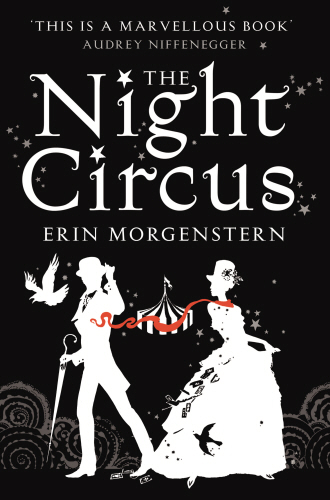
The Night Circus- Erin Morgenstern

A busy week means I am late posting about this book- something I wanted to do as soon as I put it down last weekend. I find that everything is a bit stop and start at the moment, so when I have time to read something 'just for fun'- and I enjoy it as much as I did this book- I tear through it in one sitting. Reading in this particularly feverish way was wonderful when digging into The Night Circus.
A beautiful, dark, sprawling fairytale, The Night Circus is the story of a magical black and white circus that appears, without warning, and only at night. While the people who visit the circus are stunned by the intricate, breathtaking acts and scenes they come across they do not realise that the most obvious explanation for what they see is the truth of it. The circus is magic. And not just magic, but the venue chosen for a game of skill a lifetime in the making.
The premise of the book is interesting, but I did feel that the plot had unravelled slightly by the end, as if it needed to be wrapped up quickly- which was especially jarring as for most of the book the story unfolds quite gently. The book's late nineteenth century setting also felt, at times, like something of an after thought. That being said this book's real strength is in its incredible visual quality. While I would never call it a children's book it awoke in me the same sense of excitement and intense imaginative experience that I associate with reading as a child. The descriptions of the circus are wonderful and really play into this feeling of childlike abandon. Les Cirques des Reves is just that, an escape to a space full of living dreams, and it is this feeling of a dream that the slow burning pace of the novel respects. This is not a fast paced work of fantasy, and while the novel is built around a duel, it is a duel between artists attempting to create the most perfect of dreamscapes.
Given that the book is so intensely visual I am not surprised that the film rights to it have already been sold- there is a wealth of beautiful material here. Some of it too beautiful, I think, to be translated to the screen. I attach the book trailer because- although I dislike them in general- here I think it provides a nice mood piece which may give you a better idea of what you're getting into than all my hazy thoughts. Simply, I think you should read it. A lovely book.

Friday, 17 February 2012

Wislawa Szymborska

Wislawa Szymborska, Polish poet and Nobel Laureate, died this month. I have been a big fan of her poetry since I came across her in Czeslaw Milosz's anthology, A Book of Luminous Things (yes, that is the best title imaginable for a poetry anthology, and yes, the book absolutely lives up to its name.) Szymborska was a writer who found me at an important time in my life, during a year spent studying at the University of Tennessee where I found a life shaped by reading and writing poetry in a community of brilliant, important, and hugely talented friends and writers. I found, and still find, her poetry inspiring. I love how her poems are deceptively simple- they are so lyrical, so intricate, such a pleasure to unravel. There is one poem of hers - the first I ever read- that I often find myself returning to. I consider it a beautiful meditation on language and experience.

View With a Grain of Sand
We call it a grain of sand,
but it calls itself neither grain nor sand.
It does just fine without a name,
Whether general, particular,
Permanent, passing,
Incorrect, or apt.

Our glance, our touch mean nothing to it.
It doesn't feel itself seen and touched.
And that it fell on the windowsill
is only our experience, not its.
For it, it is no different from falling on anything else
with no assurance that it has finished falling
or that it is falling still.

The window has a wonderful view of a lake,
but the view doesn't view itself.
It exists in this world
colorless, shapeless,
soundless, odorless, and painless.

The lake's floor exists floorlessly,
and its shore exists shorelessly.
Its water feels itself neither wet nor dry
and its waves to themselves are neither singular nor plural.
They splash deaf to their own noise
on pebbles neither large nor small.

And all this beneath a sky by nature skyless
in which the sun sets without setting at all
and hides without hiding behind an unminding cloud.
The wind ruffles it, its only reason being
that it blows.

A second passes.
A second second.
A third.
But they're three seconds only for us.

Time has passed like a courier with urgent news.
But that's just our simile.
The character is invented, his haste is make-believe,
his news inhuman.

Milosz considers Szymborska's view too scientific, too detached, but my own response feels more complicated than this. Like Milosz I dislike the idea of being so disconnected from the world around me, but in this poem I feel that Szymborska celebrates the richness of the internal experience in a way that is honest. It means that every individual's experience of the world is wholly unique. It also feels peaceful , as if to say worries and limitations are what we impose on ourselves- the world goes right on without them. Also, it sounds just beautiful. If you can get away with it read it aloud and you'll see what I mean.

Perhaps my reading of the poem is also coloured by Szymborska's Nobel lecture which is charming, funny, and which celebrates how astonishing the world really is, how far away she feels from finding answers. It is this desire for answers that drove her poetry, and that drives me every day in my own small endeavours. It is her own particular definition of inspiration that I find so moving because it is real, and it is why I am unimaginably lucky.

"Inspiration is not the exclusive privilege of poets or artists generally. There is, has been, and will always be a certain group of people whom inspiration visits. It's made up of all those who've consciously chosen their calling and do their job with love and imagination. It may include doctors, teachers, gardeners - and I could list a hundred more professions. Their work becomes one continuous adventure as long as they manage to keep discovering new challenges in it. Difficulties and setbacks never quell their curiosity. A swarm of new questions emerges from every problem they solve. Whatever inspiration is, it's born from a continuous "I don't know."


There aren't many such people. Most of the earth's inhabitants work to get by. They work because they have to. They didn't pick this or that kind of job out of passion; the circumstances of their lives did the choosing for them. Loveless work, boring work, work valued only because others haven't got even that much, however loveless and boring - this is one of the harshest human miseries. And there's no sign that coming centuries will produce any changes for the better as far as this goes.
And so, though I may deny poets their monopoly on inspiration, I still place them in a select group of Fortune's darlings."